January 31, 2026
Cryologger at the 2026 IASC Network on Arctic Glaciology
Posted by Adam Garbo
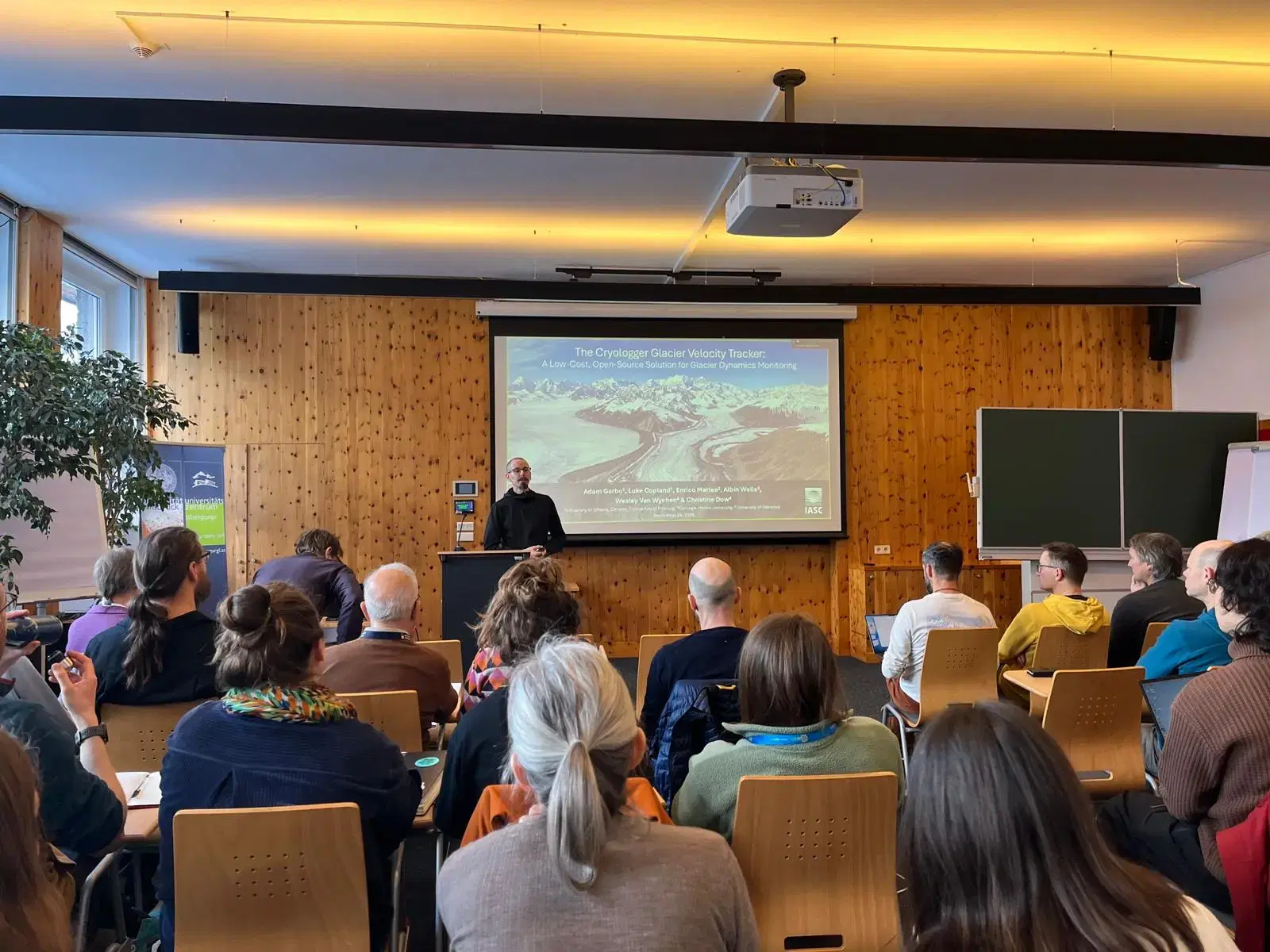
Presentation of the Cryologger Glacier Velocity Tracker at the 2026 IASC Network on Arctic Glaciology meeting, Obergurgl, Austria. Photo: Tatiana Solfjell Huard.
🌍 The IASC Network on Arctic Glaciology
The International Arctic Science Committee (IASC) Network on Arctic Glaciology (NAG) brings together researchers investigating glacier dynamics, mass balance, and ice–climate interactions across the Arctic.
The 2026 meeting, held in Obergurgl, Austria, from 26–28 January 2026, convened field scientists, remote sensing specialists, and modellers to discuss emerging observations and instrumentation challenges in rapidly changing polar environments.
📡 The Cryologger Glacier Velocity Tracker
At this meeting, I presented:
The Cryologger Glacier Velocity Tracker: A low-cost, open-source solution for glacier dynamics monitoring
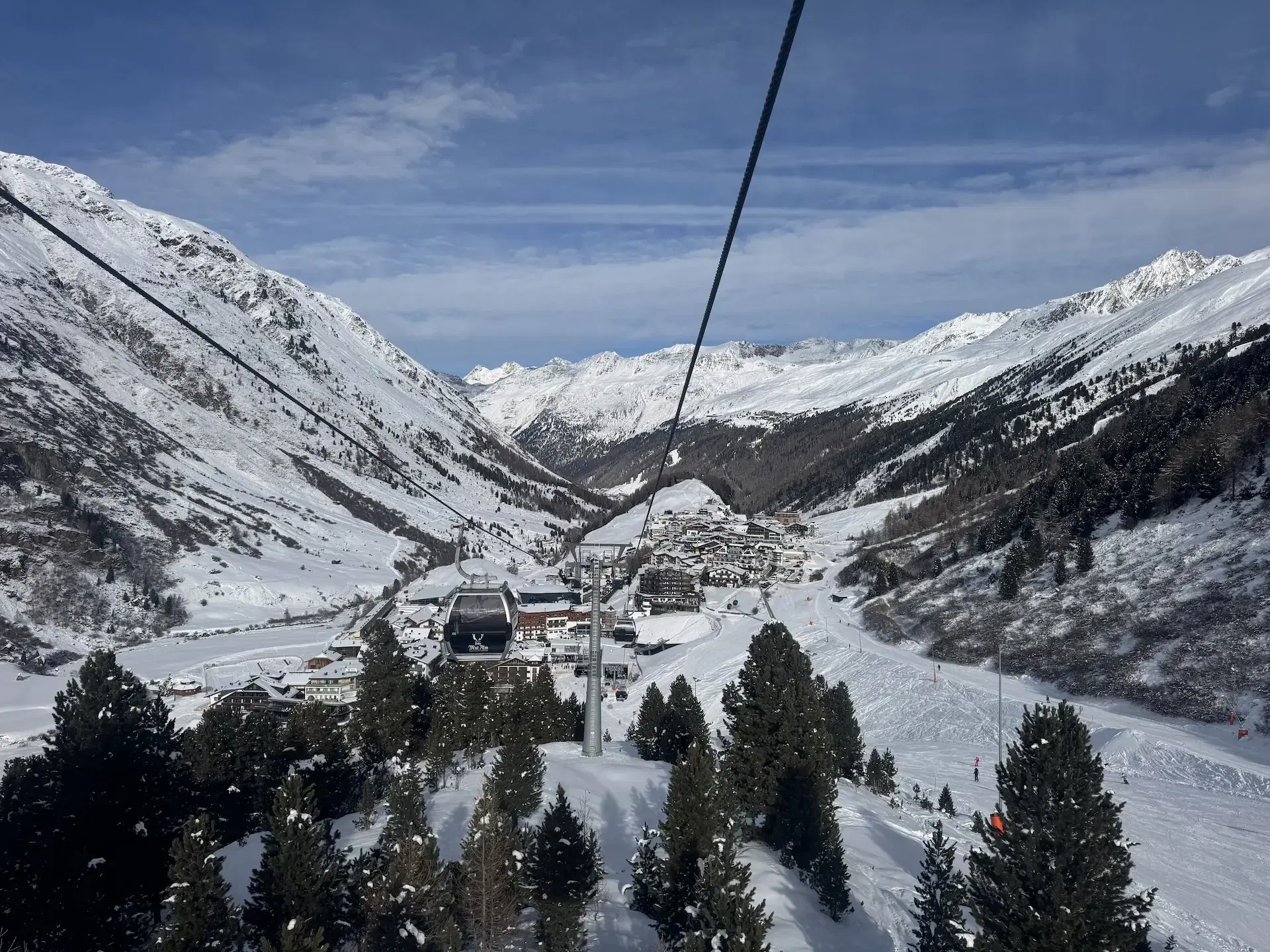
Obergurgl, Austria, host of the 2026 IASC Network on Arctic Glaciology meeting.
The presentation focused on the design philosophy behind the GVT system and its role in enabling sustained, high-density glacier velocity observations.
While survey-grade GNSS receivers provide high precision, their cost, energy demand, and logistical footprint often limit network density and multi-year operation in remote Arctic settings.
The Cryologger GVT addresses these constraints through:
- Low-power daily GNSS logging cycles
- Modular, field-serviceable system architecture
- Autonomous system reinitialization at each logging interval
- Fully open-source hardware and firmware
🧊 Arctic and Alpine Deployments
The talk highlighted multi-year deployments across:
- Devon Island, Nunavut
- The St. Elias Mountains, Yukon
Results from sites including Nàłùdäy, Belcher Glacier, and Southeast2 demonstrate that low-power systems can support robust, year-round glacier velocity monitoring while maintaining operational resilience in extreme environments.
These deployments are contributing to ongoing research on:
- Seasonal and interannual velocity variability
- Surge-type glacier dynamics
- Melt-driven short-term accelerations
- Glacier–hydrology coupling
🔬 Instrumentation and Community
A recurring theme of discussion at the meeting was the need for sustained and spatially dense velocity observations across Arctic glacier systems.
By lowering financial and energy barriers to deployment, open instrumentation platforms such as Cryologger aim to expand monitoring capacity and support broader collaboration within the Arctic glaciology community.
Many thanks to the IASC NAG conveners and fellow attendees for the thoughtful discussions and welcoming atmosphere. I look forward to continuing these conversations at the next Network on Arctic Glaciology meeting in Hasvik, Norway, in 2027.
Learn More
-
A book of abstracts from the 2026 NAG meeting will be published through the IASC in the coming months.
-
Browse all Cryologger field updates on the Cryologger Blog
-
Technical documentation for the Glacier Velocity Tracker is available in the GVT Documentation
-
Hardware, firmware, and system designs are openly available on the Cryologger GitHub repository