April 15, 2026
Cryologger GVTs Featured in ArcticNet Postcard Initiative
Posted by Adam Garbo
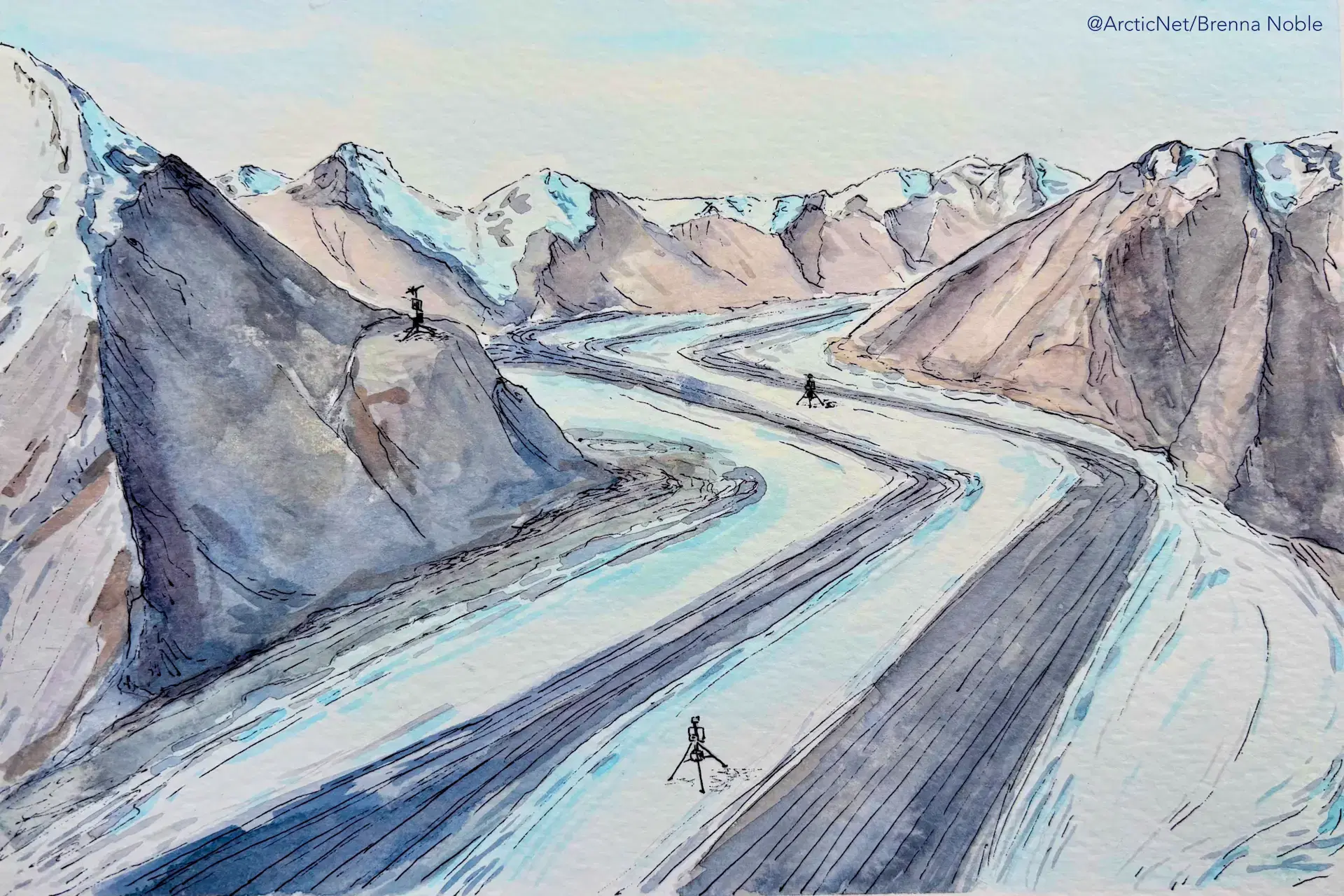
Artwork created as part of an ArcticNet science communication initiative, illustrating Cryologger Glacier Velocity Tracker deployments in the St. Elias Mountains, Yukon. Illustration by Brenna Noble, ArcticNet.
Glacier Monitoring in the St. Elias Mountains
I’m excited to share that the Cryologger Glacier Velocity Tracker (GVT) systems were recently featured in an illustrated postcard created through an ArcticNet science communication initiative. The artwork highlights the project Glacial Water Resources in the St. Elias Mountains, Yukon: Implications for Water Security and Hazard Management, which investigates how glaciers in the St. Elias Mountains are responding to ongoing environmental change and what these changes may mean for downstream water resources and natural hazards.
The illustration captures a glacier field site in the St. Elias Mountains, with Cryologger GVT systems deployed directly on the glacier surface to measure ice motion through continuous GNSS observations.
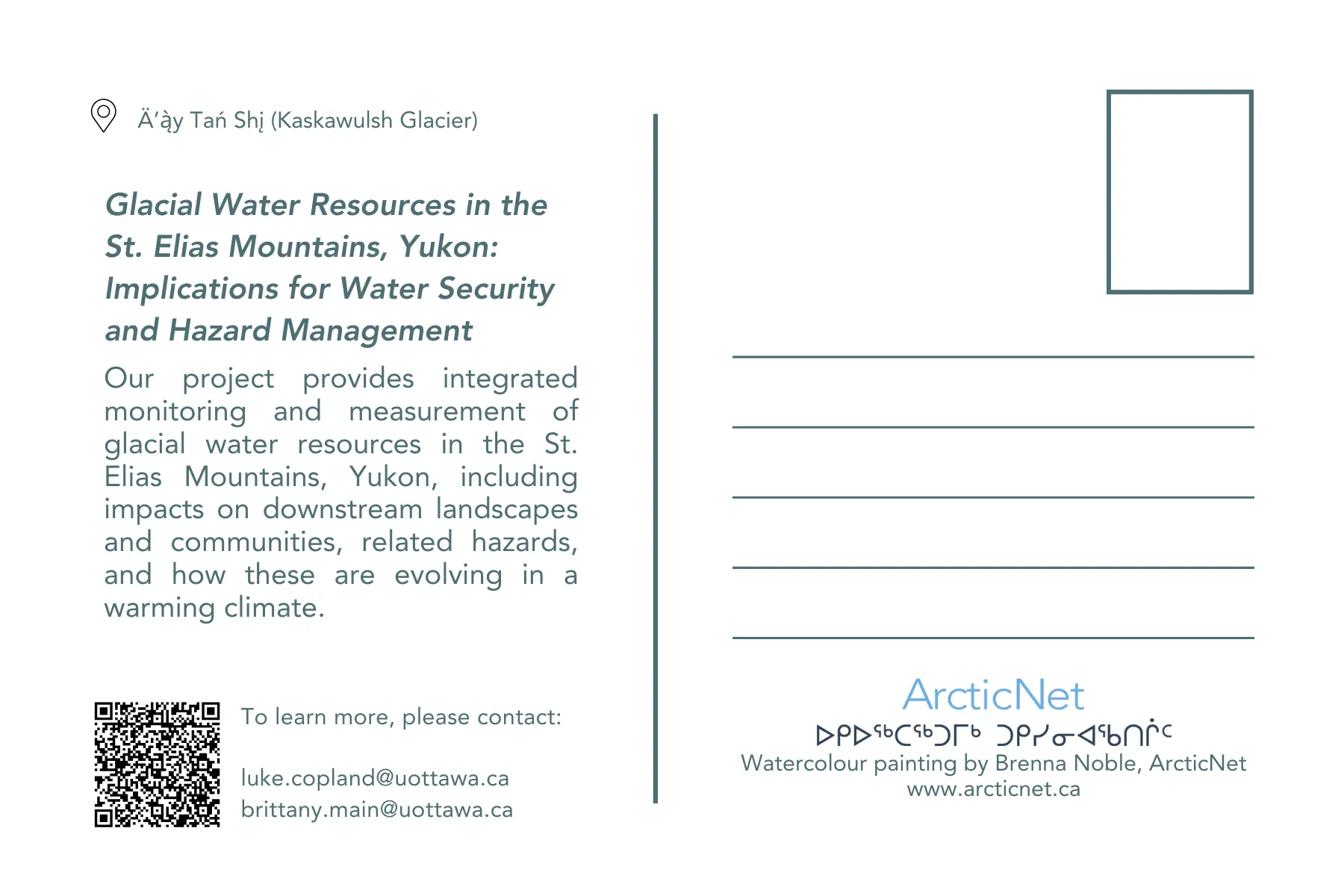
The reverse side of the postcard highlights the broader goals of the project and forms part of ArcticNet’s partnered research postcard initiative.
Measuring Glacier Motion with Cryologger GVTs
The Cryologger Glacier Velocity Tracker is an open-source GNSS platform designed for autonomous glacier monitoring in remote polar and alpine environments. The systems record high-precision glacier motion, allowing researchers to observe changes in ice dynamics across timescales ranging from hours to years.
In the St. Elias Mountains, these measurements contribute to ongoing research into glacier hydrology, changing meltwater systems, and the broader implications of glacier change for water security and hazard management in western Canada.
The field environments where these systems operate are often extremely remote and logistically challenging, making autonomous instrumentation essential for collecting long-duration observations.
Bringing Field Research to Life
Most glacier research is ultimately communicated through maps, figures, and scientific papers. What I like about this postcard initiative is that it presents glacier fieldwork in a very different way, focusing less on technical details and more on the experience of working in the St. Elias Mountains.
Many thanks to the ArcticNet team for including the project, and to Brenna Noble for creating the artwork.
Want to Learn More?
You can learn more about the Yukon glacier monitoring project and explore additional ArcticNet partnered research postcards below.
Project webpage:
Glacial Water Resources in the St. Elias Mountains, Yukon
Additional ArcticNet partnered research postcards:
ArcticNet Research Projects
Instagram:
@_arcticnet