June 1, 2026
Monitoring a Surge-Type Glacier in Svalbard
Posted by Adam Garbo
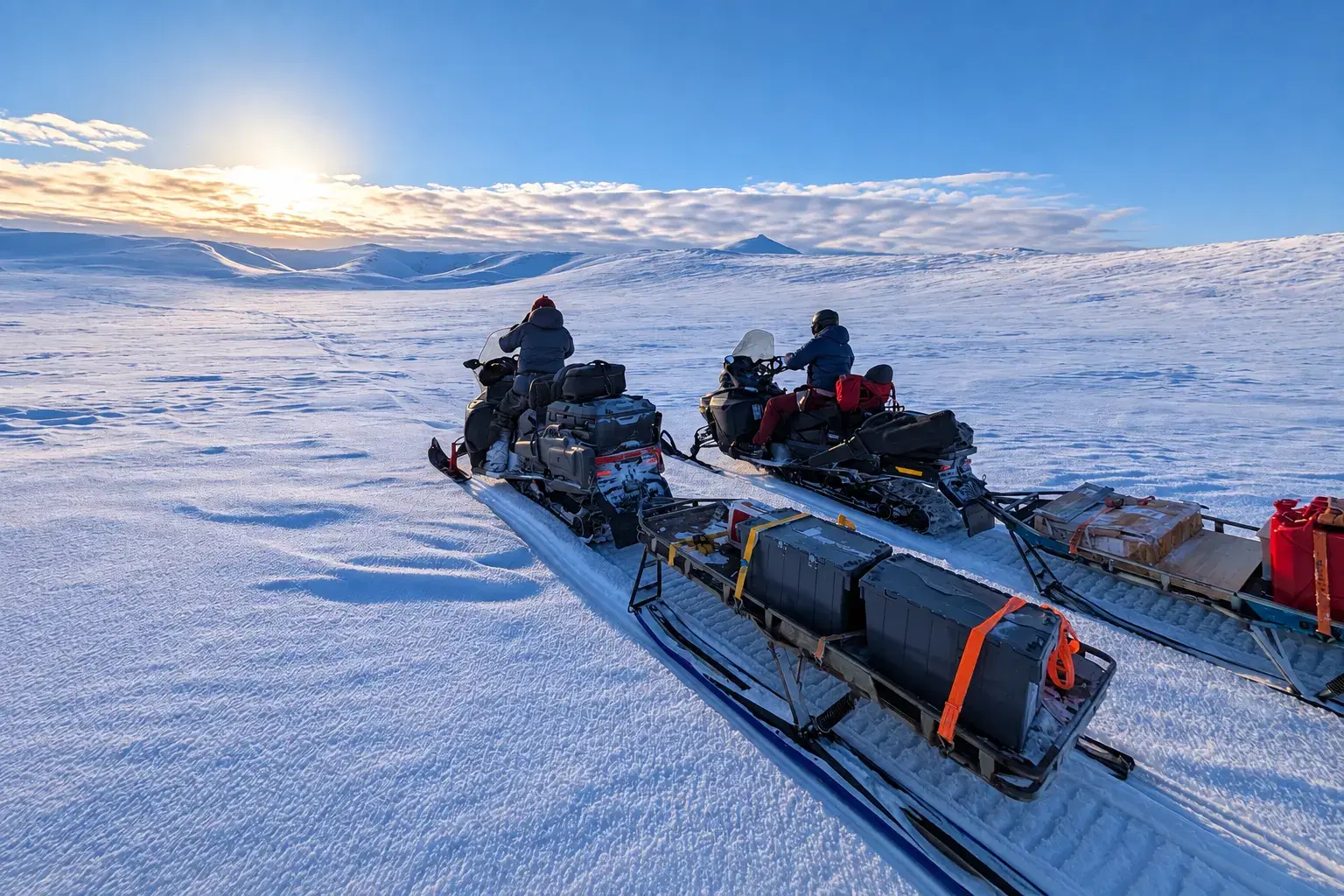
Travelling to Ulvebreen by snowmobile with the GVTs and field equipment. Photo credit: Wilson Wai Yin Cheung.
Monitoring Glacier Surges
This spring, three Cryologger Glacier Velocity Trackers (GVTs) were deployed on Ulvebreen, a surge-type glacier in Svalbard, to monitor changes in its flow over the coming years.
The instruments are part of the Surge Precursor And Initiations (SPAI) project, led by Whyjay Zheng of the CryoSensing Team at National Central University (NCU) in Taiwan. The project aims to identify the precursors and early patterns of glacier surges through variations in ice flow, with a particular focus on marine-terminating glaciers.
Glacier surges are periods when a glacier can flow tens to thousands of times faster than usual, lasting from days to years. Despite decades of research, the processes controlling when and why glaciers surge remain poorly understood. By continuously measuring changes in the movement of Ulvebreen, the GVTs may help capture signals associated with the development of a future surge.
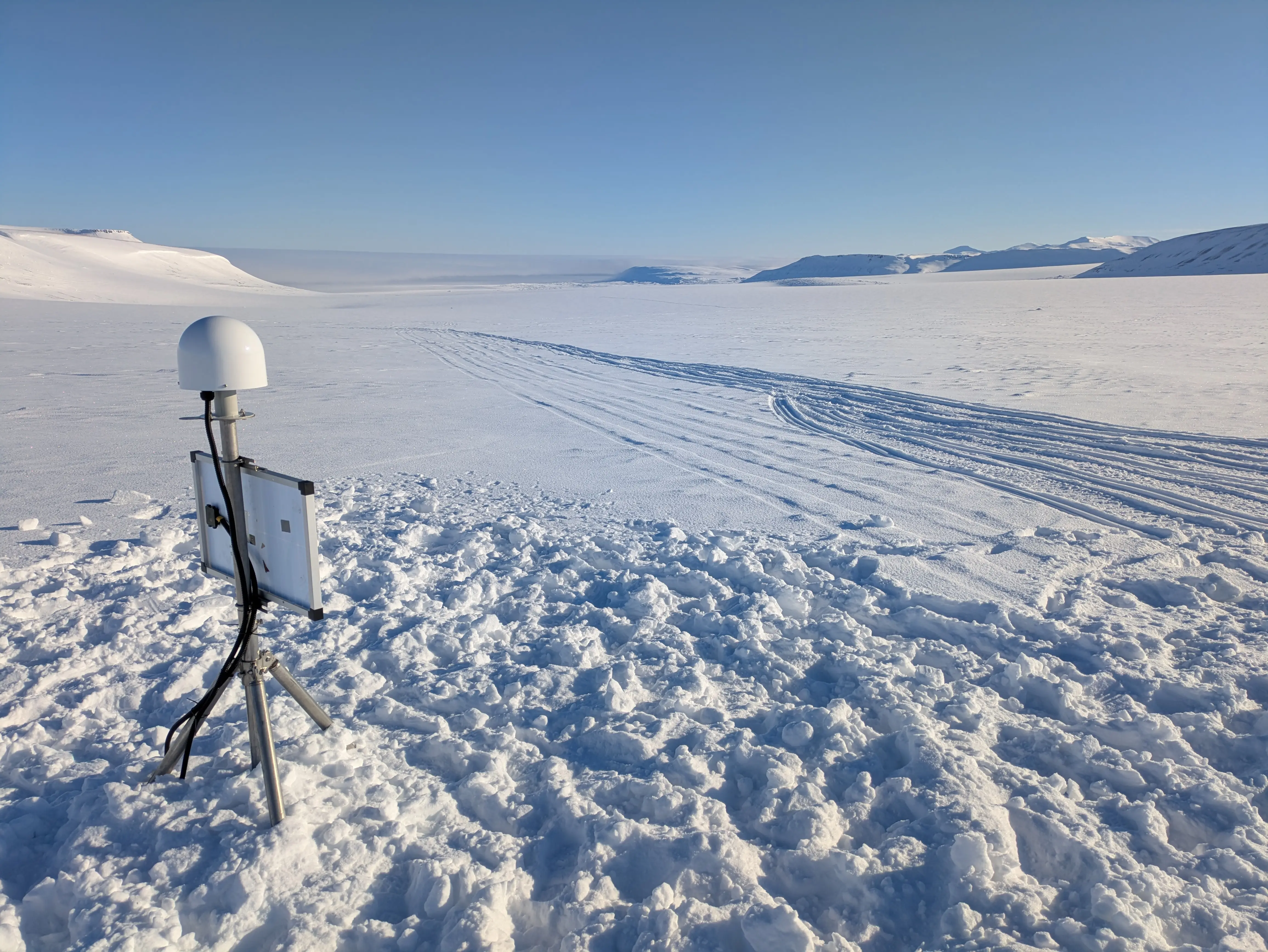
Cryologger Glacier Velocity Tracker deployed on Ulvebreen, Svalbard. Photo credit: Whyjay Zheng.
Deploying the GVTs
Ulvebreen is located approximately 70 km from Longyearbyen. In April, the field team made two day trips to the glacier by snowmobile, towing the instruments and other equipment on sleds.
Three GVTs were installed along the glacier's central flowline. At each site, the team dug a snow pit approximately 1–2 metres deep, installed the GVT and its GNSS antenna on a tripod, and then backfilled the pit. Each station took approximately one to two hours to install.
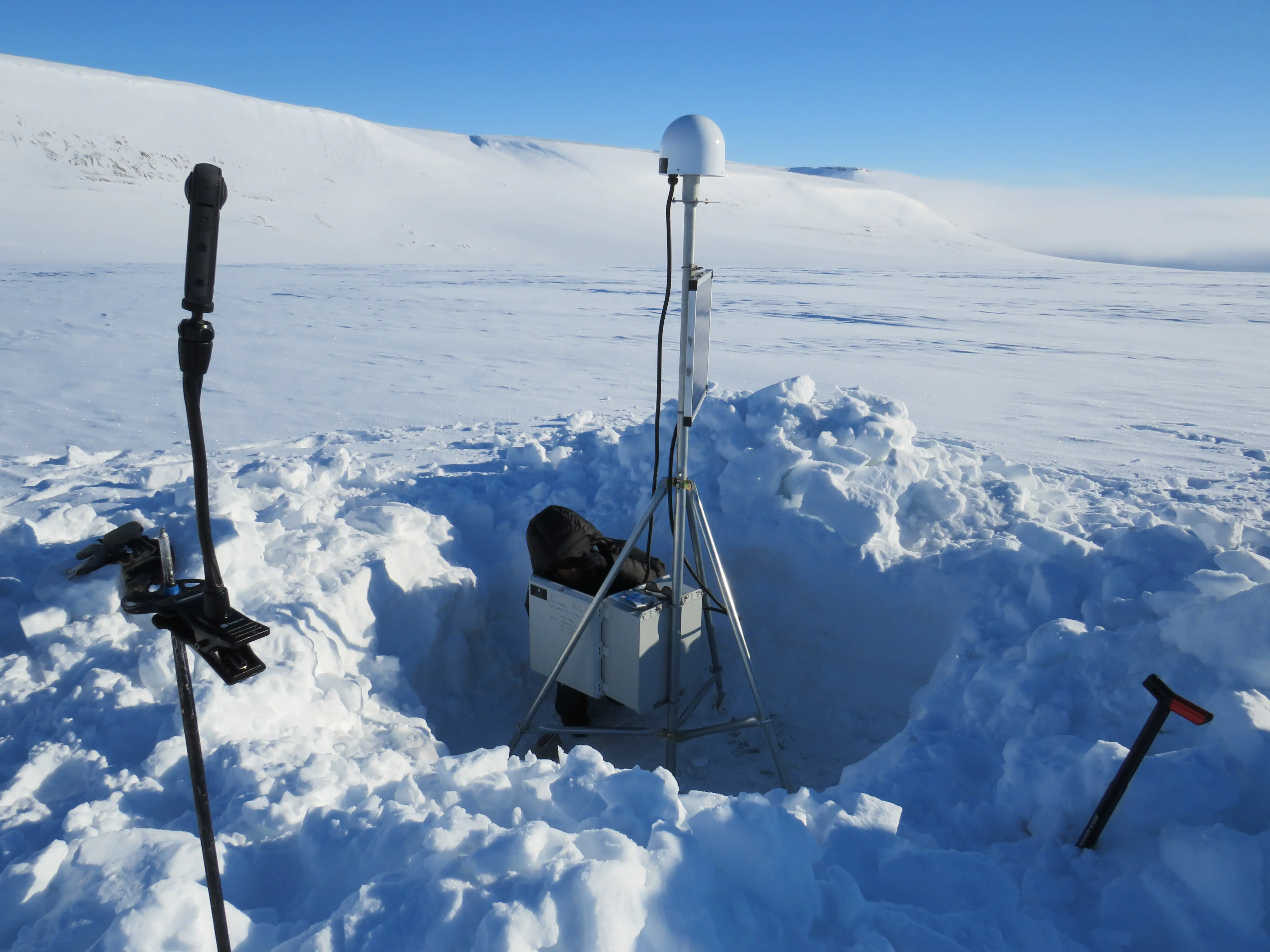
Installing a Cryologger GVT on Ulvebreen. Photo credit: William Harcourt.
Monitoring Ice Flow Year-Round
The GVTs use different observation schedules throughout the year to balance GNSS measurements with the limited solar power available in the High Arctic.
During the summer, when Svalbard experiences continuous daylight, the stations collect continuous GNSS observations to measure horizontal and vertical surface displacement. During the dark winter months, they switch to intermittent observations to conserve power.
The measurements are stored locally on microSD cards and will be retrieved during a maintenance visit planned for spring 2027. The resulting records will allow the team to calculate changes in glacier velocity over a full year and investigate how those changes relate to the processes controlling glacier surges. The measurements can also be used to validate regional glacier velocity maps derived from satellite observations.
The three stations are expected to operate for at least two years, providing a new record of ice-flow variability on Ulvebreen and, potentially, the signals leading up to its next surge.
Acknowledgements
The SPAI project was initiated by Whyjay Zheng of the CryoSensing Team at National Central University and is funded by the National Science and Technology Council of Taiwan, with logistical support from the Taiwan Polar Institute and the University Centre in Svalbard (UNIS).
The project team also includes William Harcourt of the University of Aberdeen, Wilson Wai Yin Cheung of Queen's University, and Wu-Lung Chang of National Central University.