August 31, 2026
Tracking the Breakup of Petermann Glacier
Posted by Adam Garbo
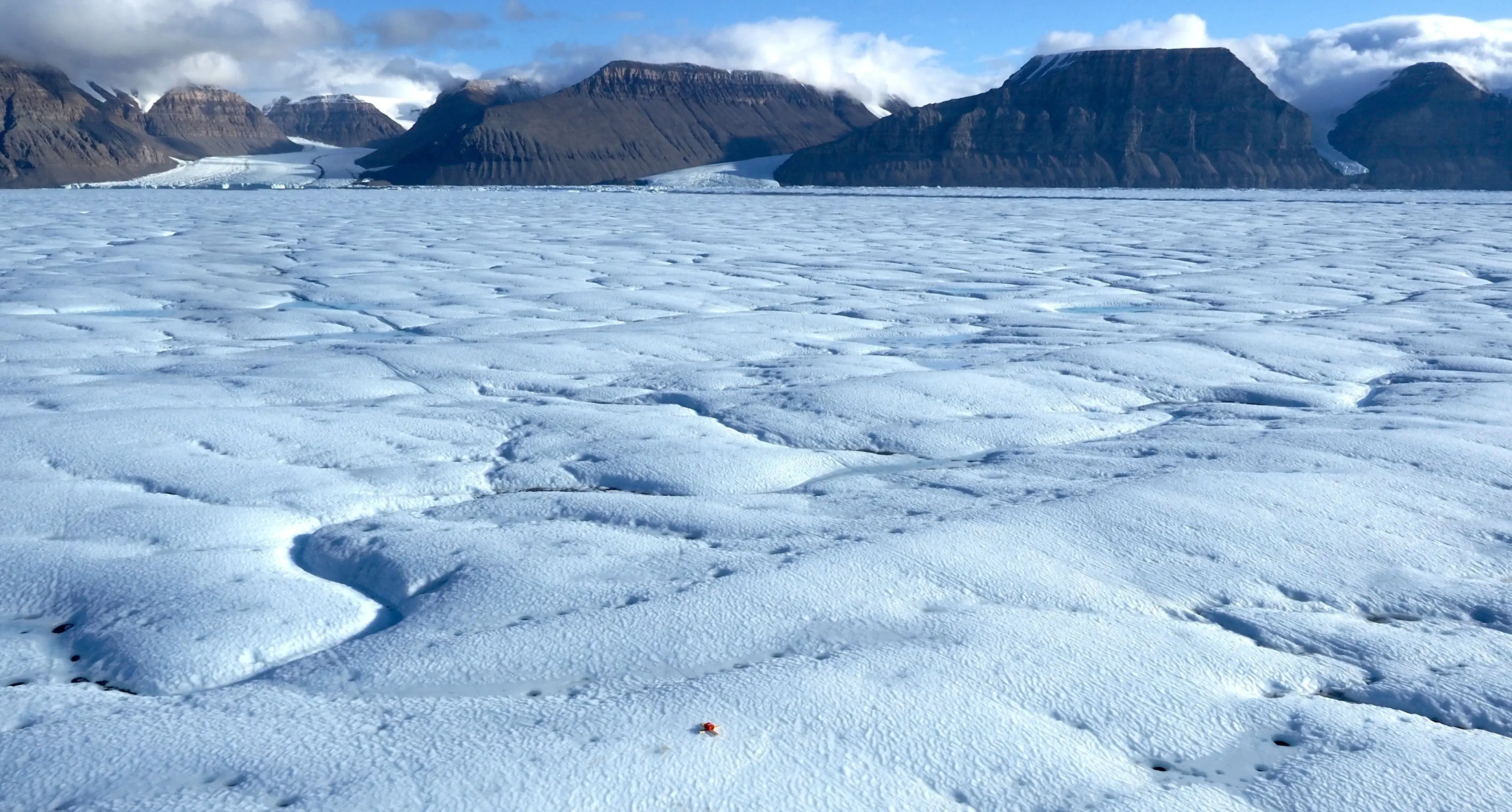
Photo credit: Raphael Moser, ETH Zurich.
Introduction
On August 4, 2026, Petermann Glacier in northwest Greenland calved a 76.4 km² ice island from its floating ice tongue. The event marked Petermann's largest loss of floating ice since 2012 and the largest Arctic calving event since 2020. The new ice island is estimated to be up to 150 metres thick and covers an area roughly comparable to Manhattan.
I detected the event through ongoing satellite monitoring of Petermann Glacier. Together with collaborators at the University of Stirling, Environment and Climate Change Canada, Lancaster University, and the University of Leeds, we have been following the growth of fractures and signs of instability across the ice tongue for several years.
Copernicus Sentinel-1 imagery showed clear deterioration along the centreline of the ice tongue on August 3, and by approximately 20:00 UTC on August 4, the new ice island had detached from the eastern side of the glacier.
Two additional sections of the floating tongue, approximately 94 km² and 84 km² in area, are expected to detach as long-developing rifts continue to cut across the remaining ice tongue. This presented an exciting opportunity to deploy Cryologger tracking beacons both on the new ice island and on parts of Petermann Glacier that may calve next.
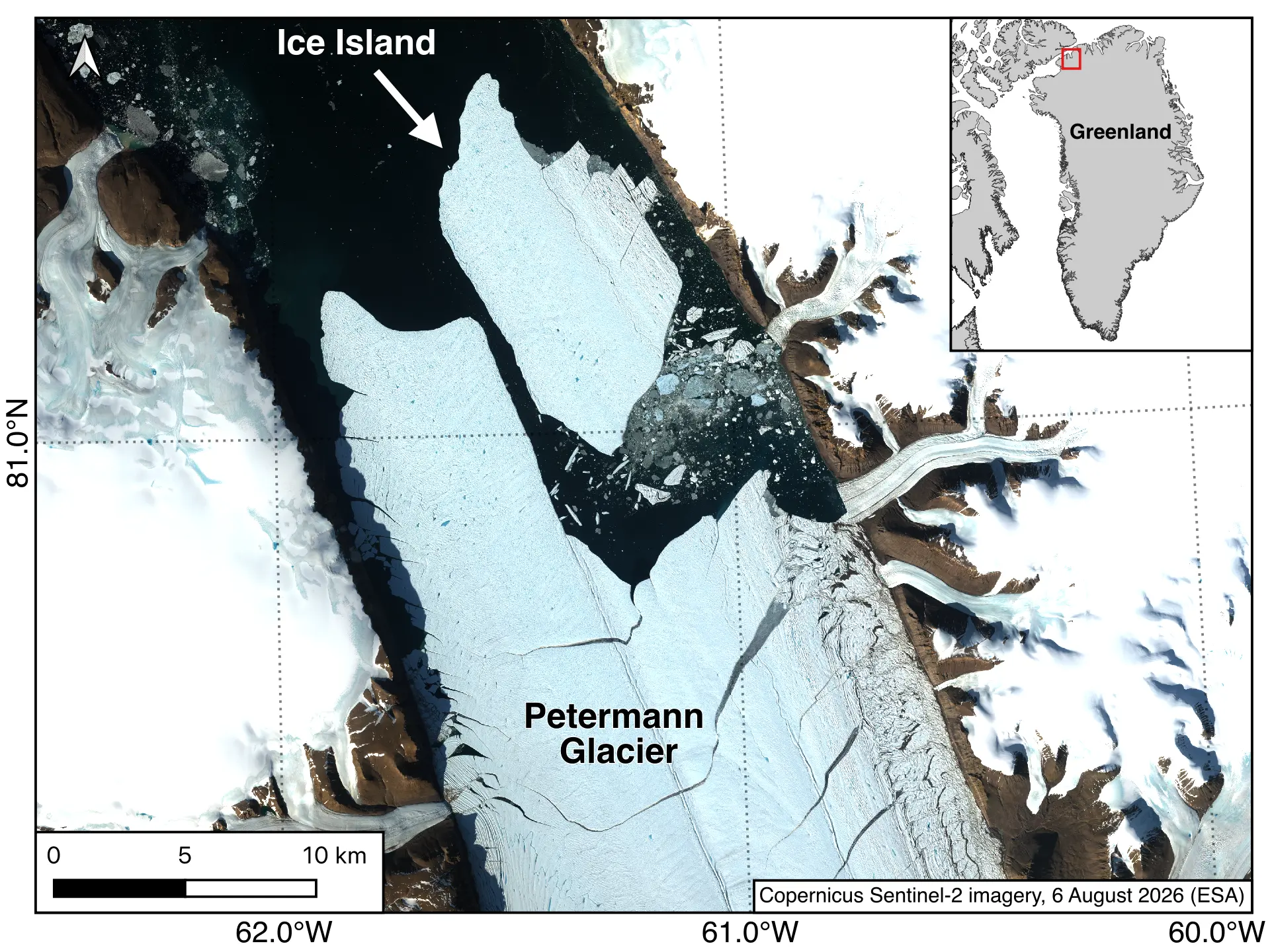
Petermann Glacier and the new ice island following the August 4, 2026 calving event.
Tracking the Next Calving Event
We had been anticipating a major calving event at Petermann Glacier for several years as rifts continued to grow across its floating ice tongue. Ahead of the 2026 field season, we prepared six Cryologger Ice Tracking Beacons (ITBs) at the Laboratory for Cryospheric Research at the University of Ottawa and mobilized them aboard the CCGS Amundsen, with the goal of tracking the glacier and its ice islands through the next major calving event.
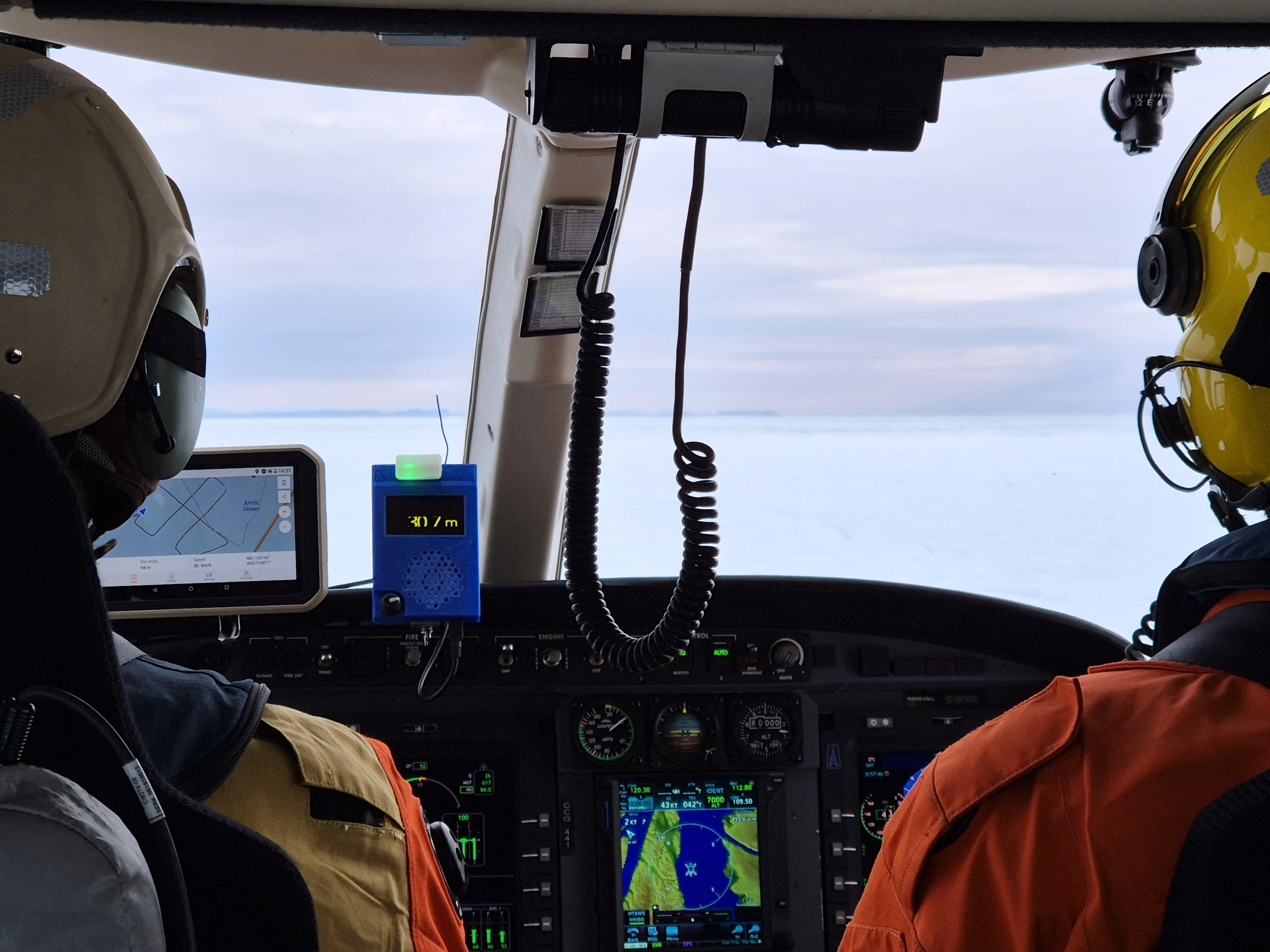
On August 29, Daniel Farinotti and Raphael Moser of ETH Zurich, working aboard the CCGS Amundsen, deployed four Cryologger ITBs across the remaining floating tongue of Petermann Glacier.
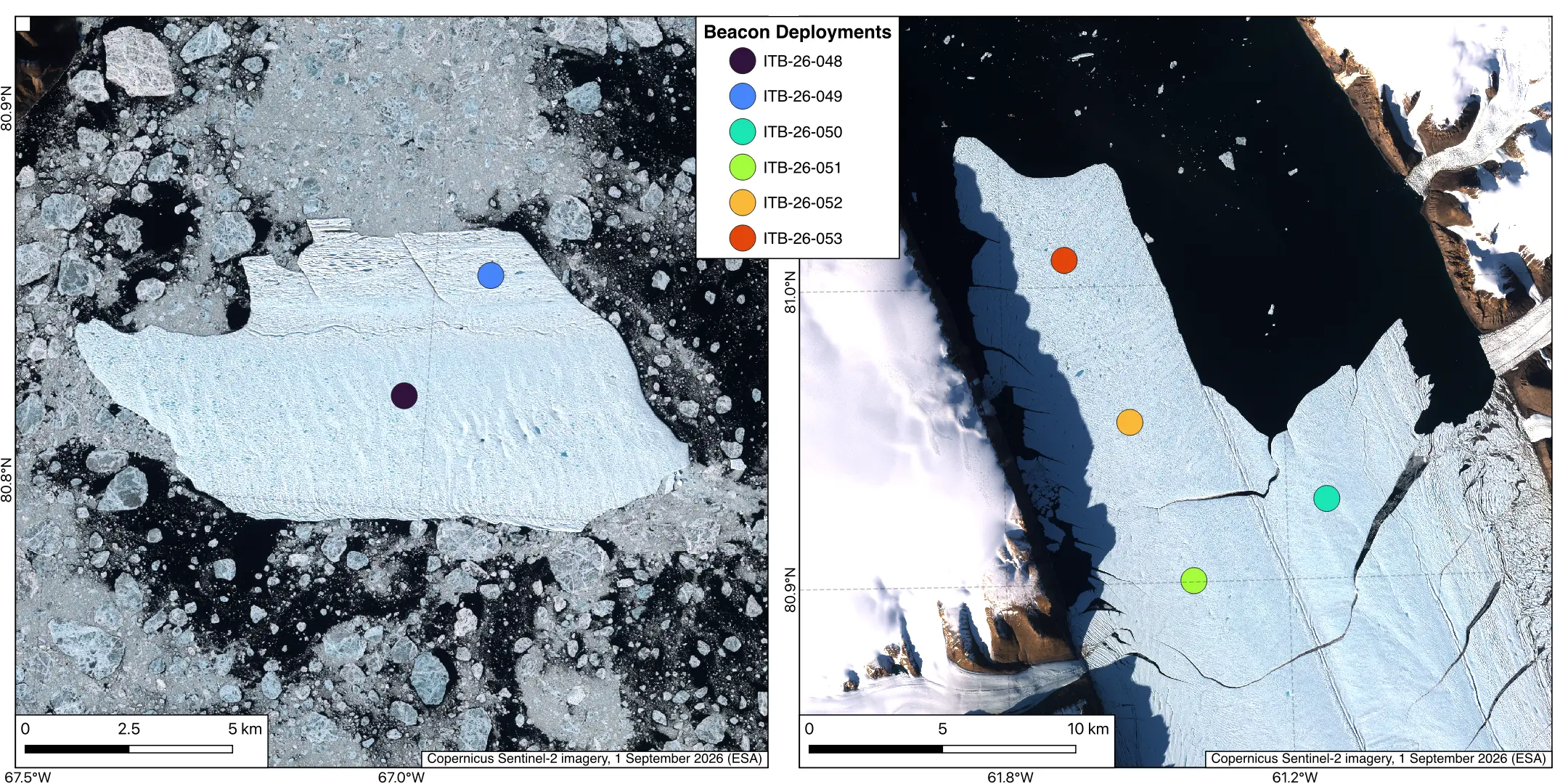
Locations of Cryologger ITBs deployed at Petermann Glacier: two on the ice island formed on August 4th (left) and four across the remaining floating ice tongue (right).
The following day, August 30, Daniel and Raphael landed on the ice island and deployed two additional Cryologger ITBs. They also conducted ice-penetrating radar surveys to measure its thickness.
The radar measurements complement the satellite imagery and Cryologger tracking data, providing information about the ice island's thickness as we follow its movement away from Petermann Glacier.
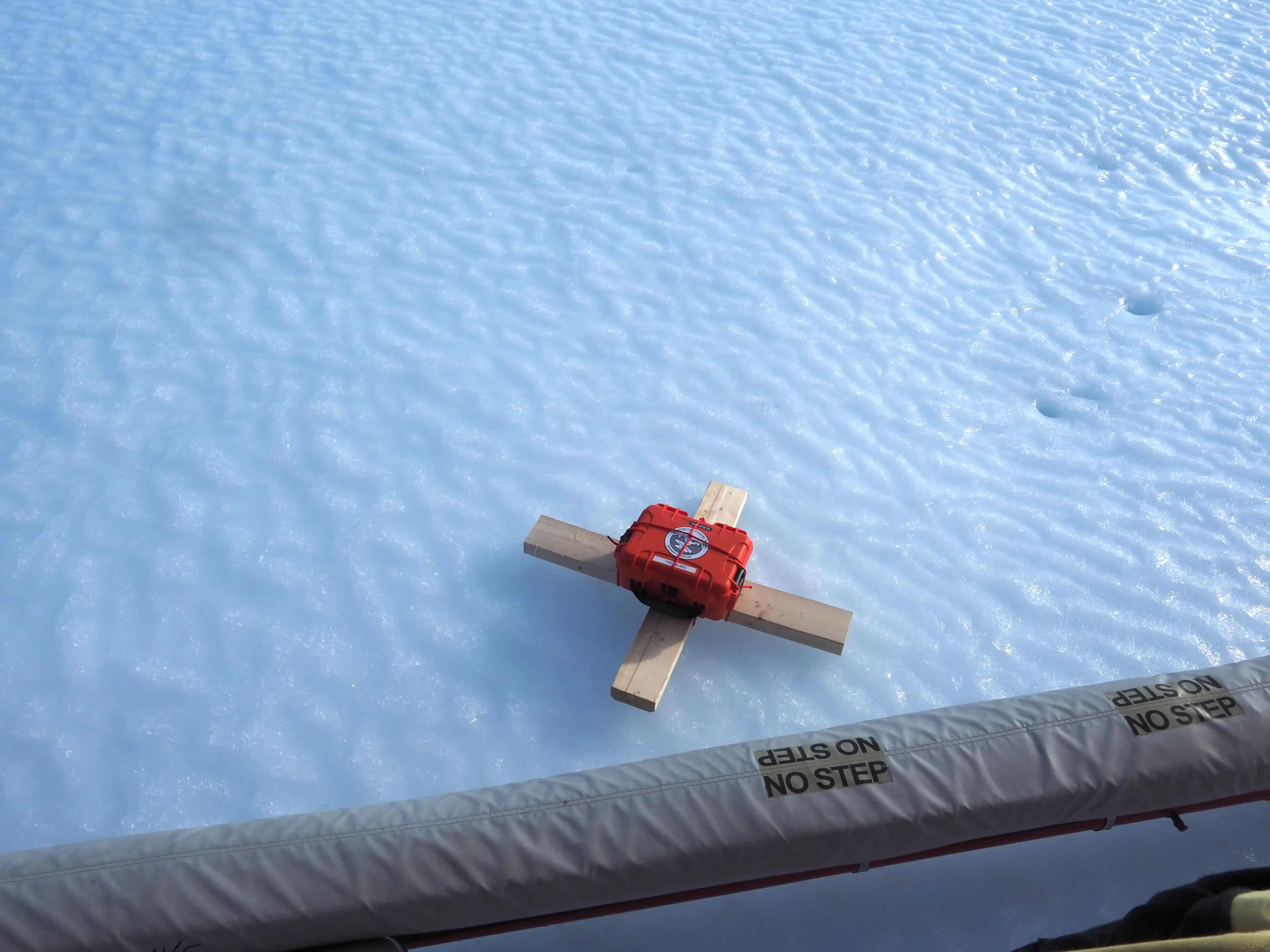
Cryologger ITB deployments (left) and ice-penetrating radar surveying (right) on the Petermann ice island. Photo credit: Raphael Moser, ETH Zurich.
Looking Ahead
With six Cryologger ITBs now deployed across Petermann Glacier and its new ice island, we have an unusual opportunity to follow both sides of an active calving system at the same time.
The two beacons on the ice island are now capturing its movement as it begins its journey south from Petermann Glacier. Follow the Petermann ice island live on the Cryologger tracking map.
Meanwhile, four beacons remain on sections of the floating ice tongue that may calve next. If they do, we hope to capture their movement before, during, and after detachment, providing a continuous record as glacier ice becomes a freely drifting ice island.
Together, these deployments will allow us to follow Petermann's breakup as it happens, from the movement of the remaining ice tongue through calving to the subsequent drift of the ice islands it releases.
Acknowledgements
A huge thank you to Daniel Farinotti and Raphael Moser of ETH Zurich for deploying the six Cryologger ITBs and conducting the radar surveys, and to Sébastien Tremblay, helicopter pilot aboard the CCGS Amundsen, for making these remote deployments possible. I would also like to thank Ignatius Rigor of the International Arctic Buoy Programme (IABP) for his continued support of the Cryologger project. Finally, thank you to the captain and crew of the CCGS Amundsen, the Chief Scientists, and Amundsen Science for supporting and facilitating the deployments.
More Information
For more information about the Petermann Glacier calving event and our ongoing research:
- University of Ottawa — Greenland glacier break creates new ice island
- University of Stirling — Stirling scientists monitor Manhattan-sized glacier break
- University of Leeds — Leeds professor part of international team monitoring Manhattan-sized glacier break
- NASA Earth Observatory — Ice Island Survives Run-In With Joe Island
- European Space Agency — Sentinel-1 captures major ice loss from Greenland glacier